

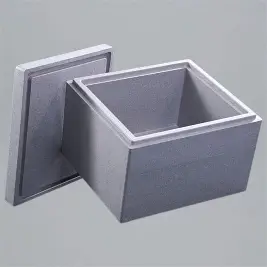
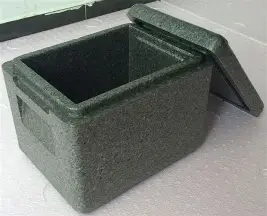
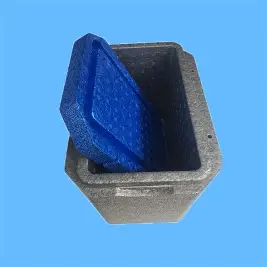
EPP Insulated Containers/box: Raw Materials, Production & Customization
Production epp
Material Foamed Material
Use To Cold-chaintransportation
We can customize insulated containers for different scenarios according to customer needs. EPP insulated containers can be applied to cold chain transportation in various life scenarios. Our products possess properties such as heat preservation, cold preservation, high strength, light weight, and environmental friendliness & recyclability, which can meet customers' diverse extreme working conditions during transportation.
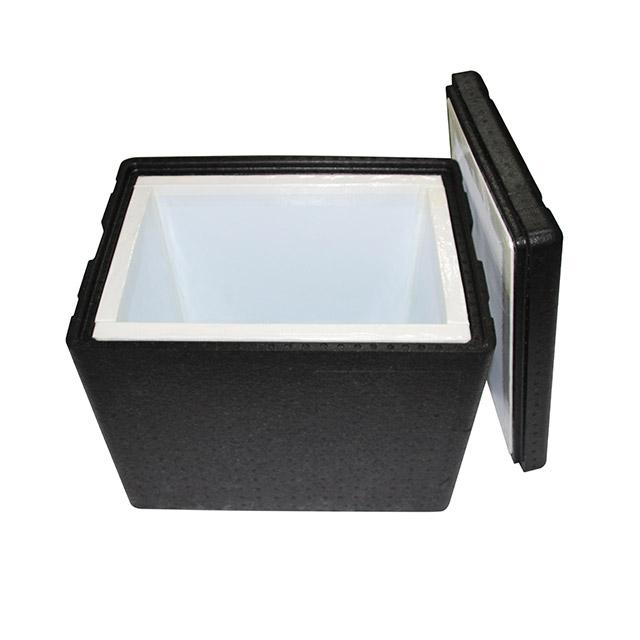 EPP Insulated Containers/box: Raw Materials, Production & Customization
Expanded Polypropylene (EPP) insulated containers use polypropylene (PP) granules as the base material, mixed with foaming agents (such as supercritical CO₂, butane, etc.) and additives. A pre-treatment process of baking at 60°C for 2-4 hours is then conducted to ensure that moisture does not affect the subsequent foaming effect.
EPP insulated containers adopt a foaming ratio of 15-30 times, with a density of approximately 0.03-0.08 g/cm³ (31-80 kg/m³). This forms a honeycomb-like closed-cell structure with a closed-cell rate of over 95%, which effectively blocks air convection and improves thermal insulation performance by 20%-30%. They can be used stably in environments ranging from -40°C to 130°C and will not release toxic substances under high-temperature conditions.
Compared with traditional insulated containers, EPP insulated containers are 30%-50% lighter, yet have a compressive strength of 150-300 Kpa. The reason lies in the special foaming process of EPP, which forms a three-dimensional network structure, allowing each cell to bear force evenly.
We support customization of EPP insulated containers in various sizes. For EPP insulated containers, each 1 cm increase in thickness can extend the thermal insulation time by 1-1.5 hours. We also offer personalized design services. By using mold forming technology, EPP material gains greater flexibility and can accurately adapt to the size, shape of various food products and specific thermal insulation requirements.


